Solim Boat Covers for Pontoons, Jet Skis & More

Solim builds 1200D Oxford boat covers and marine covers for the boats people actually own — pontoons from 16 to 28 feet, V-hull and bass boats, jon boats, center consoles, and personal watercraft — all built around the same core: a 4-layer waterproof construction rated to 9600pa with a double-seam waterproof strip at every stitch line. The catalog spans 15 marine-specific SKUs with a combined 833-review track record on the pontoon line alone, and every cover ships with integrated sewn-on straps, an elastic perimeter hem, and a storage bag. Check current availability and sizing options on Amazon.
✓ 9600pa waterproof rated✓ 16–20 straps included✓ 12-month warranty
Check Price on Amazon
Solim Trailerable 1200D PU Heavy Duty Pontoon Boat Cover Solim 3 Bow Bimini Top with 1" Aluminum Frame
9600pa Water Resistance Across Every Cover

Every Solim marine cover — pontoon, V-hull, bimini, and jet ski — is rated to 9600pa, a water resistance standard that stands up to sustained heavy rain, not just a light drizzle.

4-Layer Construction With Sealed Seams

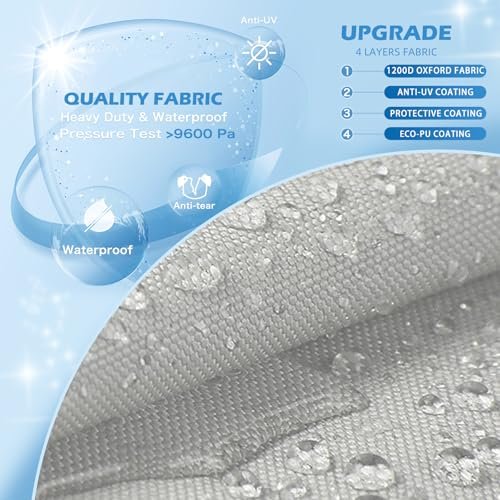
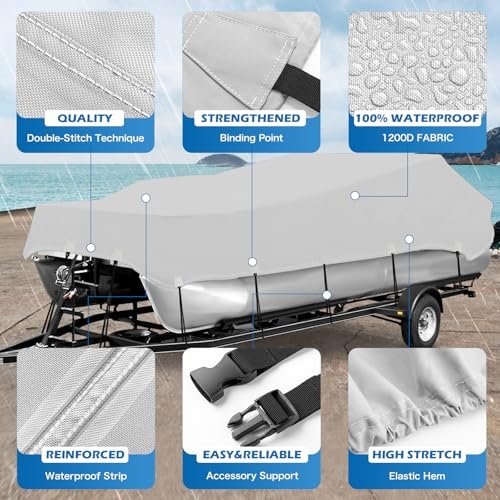
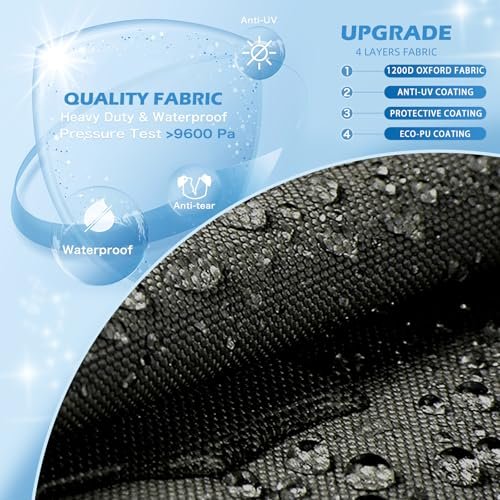
Each cover combines 1200D Oxford fabric, a 100% waterproof coating, an anti-UV layer, and a PU backing — plus a waterproof strip inside every double-stitched seam, which is where most covers fail first.

12-Month Warranty, 24-Hour Response Commitment

Every Solim cover carries a 12-month warranty backed by a stated 24-hour customer service response — meaningful in a category where some brands are effectively unreachable after purchase.

833 Reviews Across 4 Pontoon Size Ranges

Solim's pontoon cover line has accumulated 833 reviews at 4.4 stars across four deck-length sizes — 16 to 28 feet — with V-hull covers rated 4.5 stars across 418 reviews on a separate size series.

Four Cover Lines, One Construction Standard

Solim's boat cover, bimini top, and jet ski cover lines share the same construction philosophy — 1200D Oxford fabric, 9600pa PU coating, and double-seam waterproof strips — applied to three distinct protection needs. Whether you're covering a pontoon for winter storage, adding shade to a fishing boat, or protecting a PWC on an outdoor lift, the underlying build quality is consistent across all three lines.

What Most Solim Buyers Actually Order

These 12 products account for the bulk of Solim's order volume on Amazon — weighted toward the pontoon cover sizes that fit the most common 19–24 foot lake boats, plus the V-hull covers that trailer-boaters reach for when they need something that won't shred at highway speeds. The bimini top and jet ski cover round out the list for buyers who are setting up a full dock or storage situation from scratch.

Solim Trailerable 1200D PU Heavy Duty Pontoon Boat Cover
boat cover

Pontoon Cover 19–21ft Gray

See on Amazon
Solim 3 Bow Bimini Top with 1" Aluminum Frame
bimini top

3-Bow Bimini Top Gray

See on Amazon
Solim Trailerable Jet Ski Cover
jet ski cover

Jet Ski Cover 120–135in Gray/Black

See on Amazon
Solim Boat Cover Tie Down Straps
boat cover tie down strap

Replacement Tie-Down Straps 6-Pack

See on Amazon
Solim Water Weights Aqua Bag Ball Shape
water weights aqua bag

Water Weights Aqua Bag Ball

See on Amazon
Tool Belt With Suspenders
tool belt

Tool Belt With Suspenders -

See on Amazon
Solim Trailerable 1200D PU Heavy Duty Pontoon Boat Cover
boat cover

Pontoon Cover 22–24ft Black

See on Amazon
Solim Trailerable 1200D PU Heavy Duty Pontoon Boat Cover
boat cover

Pontoon Cover 16–18ft Gray

See on Amazon
Solim Trailerable 1200D PU Heavy Duty Pontoon Boat Cover
boat cover

Pontoon Cover 25–28ft Dark Gray

See on Amazon
Solim Trailerable 1200D PU Heavy Duty Pontoon Boat Cover
boat cover

Pontoon Cover 22–24ft Dark Gray

See on Amazon
Solim 1200D PU Heavy Duty Pontoon Boat Cover
boat cover

Pontoon Cover 19–21ft Dark Gray

See on Amazon
boat cover

Solim Boat Covers for Every Hull Type

Solim's boat cover line addresses four distinct hull categories — pontoon boats, V-hull and bass boats, jon boats, and center consoles — across size ranges that span 14 to 28 feet of deck length. Every cover in the line is built from 1200D Oxford fabric with a 9600pa PU rating and a waterproof strip inside every double-stitched seam. Strap counts scale with cover size: 12 straps on the smallest V-hull sizes, up to 20 on the 25–28 foot pontoon covers. All covers ship with integrated sewn-on buckles (not threaded grommets), a full-perimeter elastic hem, and a storage bag.

What to look for

  • Deck length vs. overall boat length — measure from the front gate to the rear of the deck, not tip-to-motor; this is the number that determines which size fits
  • Beam width — check the maximum beam width listed for each size range; pontoon covers in the 16–21 ft sizes accommodate up to 8 ft, while the 22–28 ft sizes allow up to 8.5 ft
  • Hull type — pontoon covers have a flat-deck profile; V-hull and bass boat covers follow the hull shape and include a 2-in-1 motor cover; jon boat and center console covers are separate sub-lines
  • Strap count — larger deck areas need more attachment points to stay secured in wind and at highway speeds; the 25–28 ft pontoon covers include 20 straps vs. 16 on smaller sizes
  • Color — gray, dark gray, and black variants are available across most size ranges; functionally identical, choose based on heat absorption preference in your storage climate

In this category

  • Pontoon Cover 19–21ft Gray — the most-reviewed Solim cover at 833 ratings; fits deck lengths up to 21 ft with a beam width up to 8 ft, includes 16 straps with sewn-on buckles and a full-perimeter elastic hem
  • Pontoon Cover 22–24ft Black — steps up to 18 straps and accommodates beam widths up to 8.5 ft, making it the right call for wider mid-size pontoons that the 19–21 ft cover won't close around
  • Pontoon Cover 16–18ft Gray — the entry size in the pontoon line, fits smaller party barges and lake pontoons with a deck up to 18 ft; same 9600pa construction as the larger sizes
  • Pontoon Cover 25–28ft Gray — the largest pontoon cover in the line, 20 straps and beam width up to 8.5 ft; built for full-size party pontoons and large family boats that 24 ft covers won't reach
  • V-Hull Bass Cover 20–22ft Black — designed for V-hull runabouts, bass boats, and fishing boats up to 22 ft with a beam width up to 100 inches; includes dual rear air vents with PE panels and a 2-in-1 motor cover that doubles as a storage bag
  • V-Hull Bass Cover 17–19ft Black — fits the most common trailer-towed bass and fishing boat lengths; 12 straps, beam up to 96 inches, dual vents, and the same 2-in-1 motor cover included
Check Price on Amazon

How to Measure Your Boat for a Cover

The most common reason a boat cover fails to fit has nothing to do with the cover itself — it's a measurement error at the start. Specifically, most buyers measure their boat's overall length instead of its deck length, and those two numbers are often 2 to 4 feet apart. Get the deck length right first, then confirm your beam width, and the size selection becomes straightforward.

Deck Length vs. Overall Boat Length

Overall length (LOA) measures the boat from the very tip of the bow to the farthest rearward point — which usually means the back of the motor. Deck length measures from the front gate or bow edge to the rear of the deck, stopping before the motor. On a typical pontoon, the motor can add 2 to 3 feet to the LOA that the cover never needs to reach.

Always use deck length when selecting a Solim pontoon cover. A pontoon that measures 24 feet tip-to-motor may have a 22-foot deck — which puts it squarely in the 22–24ft cover range, not the 25–28ft. Ordering by LOA is the single most documented sizing mistake in the category.

Solim Trailerable 1200D PU Heavy Duty Pontoon Boat Cover

How to Measure Deck Length on a Pontoon

Start at the front edge of the deck — the point where passengers would step on from a dock. Run a tape measure straight back along the center line of the deck to the rear edge, stopping at the transom or rear railing. Don't include the motor. That number is your deck length. On most pontoons you'll measure this with the boat on a trailer or lift; measuring bow-to-stern along the railing also works as long as you stop at the deck edge.

How to Measure Beam Width

Beam width is the widest point of the hull or deck, measured straight across. On pontoons, this is typically measured at the widest part of the deck structure — not at the pontoon tubes themselves, which typically extend a few inches beyond the deck edge. Measure across the widest deck point with a tape measure held level, not along the curve of any railing.

Beam width is the second variable that determines fit. A cover that's the right length but undersized for a wide beam won't close properly at the stern and will gap at the sides. Every Solim pontoon cover has a defined beam limit — check that your measurement is under the limit for the size you're ordering.

Matching Your Measurements to a Solim Pontoon Cover

Solim's pontoon line covers four deck length ranges. Here's the full breakdown including beam limits and strap counts:

  • 16–18ft cover: deck length up to 18ft, beam width up to 8ft, 16 straps
  • 19–21ft cover: deck length up to 21ft, beam width up to 8ft, 16 straps
  • 22–24ft cover: deck length up to 24ft, beam width up to 8.5ft, 18 straps
  • 25–28ft cover: deck length up to 28ft, beam width up to 8.5ft, 20 straps

Available in gray or dark gray across all four size ranges. Check current stock on Amazon before ordering — the 16–18ft dark gray and 25–28ft dark gray variants have had limited availability.

Matching Your Measurements to a Solim V-Hull Cover

V-hull and bass boat sizing works slightly differently. These covers are designed for V-hull runabouts, bass boats, fishing boats, ski boats, and jon boats — hull profiles that are narrower and deeper than a pontoon. Beam width limits are expressed in inches here rather than feet:

  • 16–18.5ft cover: beam width up to 94 inches, 12 straps, includes motor cover
  • 17–19ft cover: beam width up to 96 inches, 12 straps, includes motor cover
  • 20–22ft cover: beam width up to 100 inches, 14 straps, includes motor cover

Note that the V-hull covers include a 2-in-1 motor cover that doubles as a storage bag — that's included in the package at all three size ranges, not a separate purchase.

When to Size Up

If your deck length falls at the top of a size range — say, a 21-foot deck — measure twice before deciding between the 19–21ft and the 22–24ft cover. Covers can run slightly snug at the upper end of their stated range. A cover that's slightly large can always be managed with proper strap tension; one that's too small will pull tight at the stern, stress the seams, and won't lie flat in wind. When you're genuinely at the edge of a range, size up.

Same logic applies to beam width. If your pontoon's beam measures 7 feet 11 inches, the 8ft-limit cover will work. If you're at exactly 8ft or you're not fully certain of your measurement, consider moving to the next size up with the 8.5ft beam allowance.

Why Your Cover Needs a Support Pole

A support pole isn't an optional accessory for a pontoon cover — it's part of how the cover is supposed to work. Without one, water accumulates on the flat deck surface beneath the cover, and that standing water creates a slow, sustained pressure load on the fabric and seams. That's how most pontoon covers fail early, and it's avoidable.

The Physics Behind the Problem

Pontoon decks are flat. Unlike a V-hull boat, where the hull's shape naturally sheds water off to the sides, a pontoon deck sits level and gives rainwater nowhere to go except straight down — which means it pools directly on top of the cover fabric. One inch of rain falling on a 22-foot pontoon deck creates a significant standing weight across the cover's center section.

That weight doesn't tear the cover immediately. It pulls. Over days and weeks of repeated rain events, the constant outward stress on the seams — particularly the mid-deck seam and the stern reinforcement panel — weakens the stitching and eventually works water through even a well-constructed cover. The double-seam waterproof strip in Solim covers is specifically designed to resist water infiltration at the stitch line, but no seam construction holds up indefinitely against pooled water sitting directly on top of it.

The fix is simple: a support pole under the center of the cover creates a peak, and water runs off to the sides before it can accumulate. One pole in the center section handles most situations. Larger covers — 25–28ft — benefit from two poles placed roughly at the one-third and two-thirds points along the deck length.

Solim Trailerable 1200D PU Heavy Duty Pontoon Boat Cover

Where to Place Support Poles by Cover Size

Placement depends on deck length. These are practical guidelines based on cover geometry, not manufacturer specifications — adjust based on where your cover naturally sags:

  • 16–18ft covers: one pole centered at the midpoint of the deck length, roughly 8–9ft from the bow
  • 19–21ft covers: one pole centered at roughly 9–10ft from the bow; some owners add a second at the stern end if the cover sags in that area
  • 22–24ft covers: two poles work well — one at roughly one-third from the bow, one at roughly two-thirds; single-pole installs work if the cover has good lateral tension from the straps
  • 25–28ft covers: two poles strongly recommended; the larger sail area creates more sag points, and 20 straps alone won't prevent center-section pooling on a flat deck

What Type of Pole to Use

Solim covers don't include support poles — they're sold separately and aren't specific to any brand. Universal adjustable boat cover support poles are widely available and typically extend from about 24 inches to 60 inches in height. For pontoon covers, you want a pole that adjusts to roughly 24–36 inches of height, which creates enough of a peak to drain water without creating so much slope that the cover's straps can't keep it tensioned properly.

Some owners use a purpose-built adjustable support pole with a padded end cap to prevent puncture. Others use a simple piece of PVC with a soft end. Either works. The critical thing is that the pole tip is padded — a hard point pressing against the underside of the cover from below will eventually wear a hole at the contact point, which is the opposite of what you're trying to prevent.

The Warranty Note Worth Knowing

Solim's 12-month warranty covers quality-related defects — manufacturing issues with the fabric, stitching, or hardware. Seam failure caused by sustained water pooling on an unsupported flat deck is a use condition, not a manufacturing defect. If a cover is installed without a support pole on a flat pontoon deck and the seams eventually fail from pooling stress, that's a scenario where a warranty claim is less likely to be straightforward. Use the pole. It's a small upfront investment that directly extends the life of the cover.

bimini top

Solim 3-Bow Bimini Top for Boats

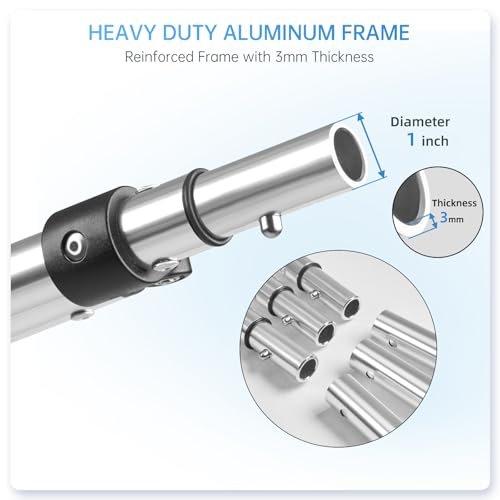
Solim's 3-bow bimini top is built around a 1-inch diameter, double-walled 3mm aluminum frame — thicker than typical budget bimini frames — with stainless steel saddles, screws, and mounts throughout. The canvas is 1200D Oxford fabric with the same 4-layer PU construction and 9600pa water resistance rating as the boat cover line. The complete kit includes the aluminum frame, canvas cover, storage boot, 2 rear support poles, 4 adjustable straps, and all mounting hardware — nothing needs to be sourced separately. At 4.8 stars across 24 reviews, it's the highest-rated product in the Solim catalog.

What to look for

  • Canopy width — measure your seating area width and the distance between your gunwales where the bimini mounts; the canopy needs to cover the seat width, not just the gunwale span
  • Frame height — confirm the frame height clears any windshield, console, or elevated seating on your boat; folding clearance matters if you trailer with the bimini mounted
  • 3-bow vs. 4-bow — a 3-bow frame works well for boats up to about 18–20 ft where compact fold-down storage matters; 4-bow frames provide a deeper shade canopy and better wind structure on larger boats (Solim currently offers the 3-bow configuration)
  • Rear support poles — the 2 included rear support poles are important for stability at speed; confirm your transom or stern deck has a mounting surface for them
  • Storage boot — included with this kit; keeps the folded canvas clean and dry between uses, which matters significantly for long-term fabric life in humid climates

In this category

  • 3-Bow Bimini Top Gray — 1-inch double-walled aluminum frame, 1200D Oxford canvas rated to 9600pa, stainless steel hardware throughout, 2 rear support poles, 4 straps, storage boot, and all mounting hardware included; the complete kit, nothing additional required

Choosing the Right Bimini Top Size

Sizing a bimini top requires three separate measurements — and most buyers only think about one of them. Get all three right and the Solim 3-bow bimini installs cleanly on the first attempt. Miss one and you'll end up with a canopy that either doesn't cover the seat area properly or can't mount to your gunwale width.

The Three Measurements That Actually Matter

1. Seat width: Measure across the widest point of your seating area — the total width you want the canopy to cover from side to side. This is the number most people think of first, and it's the right starting point. A canopy that's narrower than your seating area leaves the sides exposed; one that's significantly wider than necessary creates structural leverage that stresses the mounting hardware in wind.

Solim 3 Bow Bimini Top with 1" Aluminum Frame

2. Gunwale mounting span: This is the distance between the two points on the gunwale (the top edge of the hull sides) where the bimini's feet will mount. This measurement is critical and distinct from seat width — on many boats, the gunwale extends inward several inches from the widest point of the hull, so your mounting span may be narrower than your seat width. The bimini frame needs to span this distance exactly. If the feet land inboard of the gunwale or outboard of it, the mounting hardware won't seat properly.

3. Canopy height clearance: Measure the vertical clearance you have from your gunwale mounting points to any obstruction above — a tower, a hard top, or a low dock. Standard bimini frames adjust in height, but they have a range. The Solim 3-bow bimini uses a 1-inch diameter, double-walled 3mm thick aluminum frame — it's rigid enough that the final height is set by the frame arc, not adjustable on the fly. Make sure your mounting position and desired height are compatible with the frame geometry before ordering.

3-Bow vs. 4-Bow — When Does Each Make Sense?

The bow count refers to the number of horizontal arching support frames. A 3-bow bimini has two end arches and one center arch. A 4-bow adds a second interior arch, creating a larger, more structurally stable canopy with better wind resistance and more shade coverage depth front-to-back.

For most boats up to about 18–20 feet, a 3-bow bimini provides adequate coverage and folds more compactly when stowed. The Solim 3-bow bimini offers two installation options — fold back or fold down — with quick-release buckles that let you remove or reconfigure without tools. The 2 rear support poles and 4 adjustable straps keep it stable once deployed. If your boat is under 20 feet and you prioritize compact stowage, the 3-bow configuration is the right call.

Longer boats — generally 20 feet and above — benefit from a 4-bow design because the greater deck span requires more support points to prevent the canopy from flexing excessively in wind. A 3-bow top stretched across a 26-foot pontoon deck will work in calm conditions but may flap, stress the mounting points, or fold under significant wind load. At that size, the 4-bow is genuinely worth the additional structure.

Checking the Fit for the Solim 3-Bow Bimini

The Solim 3-bow bimini (B0GYQTWJDM) is compatible with a wide range of boat types — fishing boats, deck boats, jon boats, bass boats, and pontoon boats. The package includes everything needed for installation: the 1-inch aluminum frame, the 1200D Oxford canvas cover rated to 9600pa, a storage boot, 2 rear support poles, 4 adjustable straps, and all necessary mounting hardware. No separate hardware purchase required.

The stainless steel saddles, screws, and mounts are included — not a generic kit. The removable pin system allows the top to fold or detach in seconds, which matters if you're keeping the boat in a covered slip or need to clear bridge clearance on a river run.

Before ordering, confirm your gunwale mounting span matches the bimini's foot spacing. If your boat has aftermarket electronics, towers, or any hardware mounted to the gunwale near the bow area, check that the mounting feet have clear contact points. The frame is designed for standard gunwale installation — non-standard hull profiles or built-up gunwale hardware may require minor adjustment to mounting hardware placement.

Who This Bimini Is Not For

Honestly, if you're shopping for a bimini to fit a large pontoon with a complex factory T-top or an integrated hard top, the Solim 3-bow isn't the right product. Those configurations typically require custom canvas or a purpose-built replacement top designed for that specific boat model. The Solim bimini is engineered for standard open-boat configurations — it's a universal-fit product, which means it excels within a defined range and isn't the right answer for unusual hull geometries or boats that already have structural shade systems in place.

jet ski cover

Solim Jet Ski Cover for 2 and 3-Seat PWCs

Solim's jet ski cover is built from 1200D Oxford fabric with a 3-layer PU coating rated to 9600pa — the same waterproofing standard as the boat cover line, applied to a cover designed specifically for personal watercraft. It fits Sea-Doo, Yamaha, and Kawasaki 2–3 seat models across three length ranges: 115–120 inches, 120–135 inches, and 135–145 inches. A reflective rear air vent allows moisture and heat to escape without creating a rain entry point — directly addressing the condensation and mildew problem that's the most common complaint about sealed PWC covers. Five adjustable straps with quick-release buckles and a full-perimeter elastic hem keep it secure whether the ski is on a trailer, lift, or dock.

What to look for

  • PWC length — measure nose to rear step, not including the trailer; match that measurement to the correct size range (115–120 in, 120–135 in, or 135–145 in); most 2-seat models fall in the 115–120 in range, most 3-seat models in the 120–135 in or 135–145 in range depending on model year
  • Storage location — if the ski is stored outside on a lift or dock in a humid climate, the rear air vent is functionally important, not just a nice-to-have; it prevents the condensation cycle that causes mold in foot wells
  • Trailering use — the 5-strap system with elastic hem is rated for trailering; ensure all straps are fully tensioned before towing and check the hem is locked around the hull perimeter before highway speeds
  • Brand compatibility — the cover fits Yamaha WaveRunner, Sea-Doo (GTI, GTX, Spark, and similar hull widths), and Kawasaki Jet Ski models; when in doubt, verify by hull length in inches rather than model name since hull dimensions shift between model years

In this category

  • Jet Ski Cover 120–135in Gray/Black — 1200D Oxford with 3-layer PU at 9600pa, reflective rear air vent for moisture control, 5 adjustable straps with quick-release buckles, elastic perimeter hem, and a storage bag; fits Sea-Doo, Yamaha, and Kawasaki 2–3 seat models in the 120–135 inch length range

How Jet Ski Covers Trap Moisture and Mold

The most common complaint about jet ski covers isn't waterproofing failure — it's the opposite problem. A cover that seals too well traps heat and humidity inside, turning the footwells and seat area into a mold-growing environment within a few weeks of warm-weather storage. The fix isn't to use a worse cover. It's to use a cover with the right ventilation design.

How Condensation Builds Under a Sealed Cover

During daylight hours, sunlight heats the metal and fiberglass surfaces of a jet ski — the hull, the seat pan, the handlebars. That heat radiates upward into the enclosed space under the cover. Warm air holds more moisture than cool air, so as the interior heats up, any residual moisture from the last ride — water in the footwells, humidity absorbed by the seat cover, moisture in the engine compartment — evaporates and becomes airborne humidity inside the cover.

At night, temperatures drop. The cover surface cools faster than the interior air, and the humidity that was held in suspension condenses back into liquid water on the cooler surfaces — the interior of the cover fabric, the seat, the footwell floors. Do this cycle repeatedly over two or three weeks of outdoor storage in a humid climate like coastal Florida, the Gulf Coast, or the Pacific Northwest, and you have standing water in the footwells and mold colonies starting on every soft surface.

Solim Trailerable Jet Ski Cover

This isn't a theoretical concern. Jet ski owners on r/jetski consistently report footwell water accumulation after rain events with covers that appeared waterproof from the outside. The water isn't always coming through the fabric — it's often condensation forming on the interior.

How the Solim Reflective Air Vent Works

The Solim jet ski cover (B0GQGRZ91T) includes a rear air vent with a reflective strip — not just a hole in the fabric, but a specifically designed opening that addresses both the moisture problem and the rain entry problem simultaneously.

The vent allows warm, humid air to exit from inside the cover as temperatures rise during the day. That airflow interrupts the condensation cycle by preventing the interior from becoming fully sealed — moisture-laden air escapes before it can condense back onto surfaces at night. The PE panel design prevents rain from entering through the vent opening by deflecting water away from the vent while still allowing air movement. The reflective strip adds low-light visibility, which matters if the ski is stored on a dock or lift where someone might back a boat into it at dusk.

This is meaningfully different from a cover that's simply coated for waterproofing with no ventilation. Both sealing and ventilation need to be addressed — not one or the other. The Solim cover's 3-layer PU coating rated to 9600pa handles the rain and UV protection; the rear vent handles the condensation problem that the coating alone can't solve.

Practical Storage Tips for Humid Climates

A few habits that make a real difference when storing a jet ski outdoors in high-humidity conditions:

  • Don't cover a wet ski immediately after riding. Give it 20–30 minutes in open air to release the obvious surface water before putting the cover on. Covering a dripping ski traps that water directly inside from the start.
  • Tilt the ski slightly if possible. On a trailer, a slight nose-up angle lets any remaining footwell water drain toward the stern bilge area rather than pooling flat. Minor, but useful over a long storage period.
  • Check the footwells after the first week. If you're seeing standing water, the issue is either condensation (ventilation problem) or a cover fit gap letting rain in. Identifying which it is tells you whether to adjust the strap tension or the storage position.
  • In particularly humid climates — Gulf Coast, Florida, Hawaii — consider a moisture-absorbing pack inside the footwell. This is belt-and-suspenders, not a substitute for proper ventilation, but it helps during multi-week storage without access to the ski.

Size Selection for the Solim Jet Ski Cover

The Solim jet ski cover comes in three length options: 115–120 inches, 120–135 inches, and 135–145 inches. Measure your PWC from the tip of the nose to the rear boarding step — not including the trailer — and match that measurement to the appropriate range.

As a general reference: most 2-seat models fall in the 115–120 or 120–135 inch range depending on model year, while 3-seat models (Sea-Doo GTX, Yamaha VX Cruiser HO, Kawasaki Ultra series) typically measure in the 130–145 inch range. Model year matters — a 2018 Sea-Doo GTX and a 2023 Sea-Doo GTX are different lengths. Confirm your specific model's length before selecting a size. The cover fits Yamaha, Sea-Doo, Kawasaki, and other major PWC brands within the defined length ranges.

Storage, Docking, or Trailering — Which Cover Setup

How you use your boat between outings determines how you need to set up the cover. A cover that works well sitting on a mooring lift for six months isn't necessarily set up correctly for a 60 mph highway run, and vice versa. Here's how the three main scenarios differ — and what each one demands from both the cover and the installation.

Highway Trailering

Trailering is the hardest use case for any cover. At highway speeds, wind forces work against every part of the installation — the elastic hem, the straps, and the fabric itself. A 60 mph crosswind on an exposed highway can generate enough lift under an unsecured cover to completely remove it in seconds.

All Solim covers are designed for trailering use. The integrated sewn-on buckles — not grommets, not separate loops — mean the straps are structurally attached to the cover rather than threaded through attachment points that can tear out. That distinction matters at speed. For pontoon covers, you're working with 16 to 20 integrated straps depending on size; for V-hull covers, 12 to 14 straps plus the elastic hem.

Before any trailer run, tension all straps fully. The elastic hem creates a perimeter seal, but straps are what prevent wind from getting underneath and lifting the cover from below. Check every strap connection before pulling out of the driveway — it takes about two minutes on a properly rigged cover and saves you a roadside recovery situation. Some instructions include a conservative speed recommendation; the cover performs as designed when all attachment points are fully secured.

One practical note: tall accessories left standing — a folding bimini that hasn't been lowered, raised deck furniture — create lifting points that catch wind and stress the cover at exactly those contact spots. Fold and secure everything before covering for a trailer run.

Docked or Mooring Storage

On-water storage has a different primary concern: wind isn't constant, but it's unpredictable. A cover that sits perfectly still on a calm day can experience 40 mph gusts during a storm without any warning. The elastic hem on Solim covers creates a 360-degree perimeter seal against the hull that purely strap-based installations don't provide — and that matters on a dock where there's no one watching the cover when a storm rolls through.

For mooring and dock storage, the strap tension can be slightly looser than for trailering — you want the cover to have some ability to flex in wind rather than being pulled completely rigid. But all straps should still be attached and snugged. A cover that's half-secured is worse than a fully secured one in a gust because the unsecured side creates a sail that levers against the secured side.

Ventilation matters more here than in any other use case. A cover sitting on a boat at a dock for weeks in July in Georgia or Florida is sitting over a humid, sun-heated space. The V-hull line's dual rear air vents with PE panels allow warm, moist air to escape from under the cover without creating a rain entry point. For pontoon covers in long-term mooring situations, the support pole recommendation becomes especially relevant — overnight rain events with no one checking the boat are exactly when pooling causes damage.

Off-Season Land Storage

Long-term land storage — the boat on a trailer or on stands in a yard or driveway from October through April — is the use case with the most sustained UV and weather exposure. The 9600pa waterproof rating and the anti-UV coating both earn their keep here. Snow load is a real concern in northern climates: even a modest snowfall creates significant weight concentrated across the cover's surface, and a cover without a support pole will let that snow sit flat and accumulate rather than sliding off.

For off-season storage, the support pole isn't optional — it's essential. Snow has more weight per square inch than rainwater, it stays put rather than draining, and it doesn't care how good the seam construction is if enough of it accumulates. Two poles on a 25–28ft pontoon cover during a Midwestern winter is a reasonable precaution.

Check the cover once after the first major storm of the season. Look at the strap tension, the elastic hem perimeter, and whether any snow has accumulated in pockets. Adjust once and you usually won't need to revisit it until spring. The storage bag that comes with every Solim cover is useful here — when you pull the cover in spring, it goes straight into the bag rather than sitting loose in a garage corner where UV still degrades the fabric over time.

What 1200D and 9600pa Actually Mean

Two numbers appear on every Solim cover: 1200D and 9600pa. These aren't marketing claims — they're measurable fabric specifications. Understanding what they mean, and what they don't mean, helps you evaluate whether a cover will hold up to your actual storage conditions rather than just the optimistic ones.

What "D" Means — Denier Explained

Denier is a unit of fiber weight. Specifically, it measures the mass in grams of 9,000 meters of a single thread. Higher denier means a thicker, heavier individual thread — which translates to more abrasion resistance and generally more resistance to tearing under mechanical stress.

Common boat cover fabric weights run from about 300D on budget covers up to 1200D on heavy-duty marine covers. The jump from 600D to 1200D isn't just twice the thread weight — it's roughly twice the abrasion resistance and substantially more resistance to puncture from contact with boat hardware, trailer supports, and tie-down points. At the 16–18ft size range, a 1200D cover might weigh meaningfully more than a 600D alternative of the same size. That weight is the fabric doing more work.

One important clarification: denier describes the fabric thread weight alone. It says nothing about waterproofing. A 1200D fabric that's untreated will still absorb water. What makes the fabric waterproof is the coating system applied on top of the base fabric — which brings us to the Pa rating.

What 9600pa Means — Waterproof Rating Explained

Pa stands for Pascal, a unit of pressure. A waterproof rating expressed in Pascals describes how much hydrostatic water pressure the fabric can withstand before water begins to penetrate. The higher the Pa rating, the more pressure the fabric can resist — which translates directly to how hard a rainstorm it can handle.

A few reference points: standard "waterproof" coatings on basic covers often rate at 1,500–3,000pa. Mid-range boat covers typically run 6,000–8,000pa. Solim covers are rated at 9,600pa across the entire line — pontoon, V-hull, bimini top, and jet ski cover all carry the same standard. Heavy sustained rain, not just a sprinkle, is what 9,600pa is built for.

The practical relevance: if you're storing a pontoon boat through a full Midwest or Gulf Coast rainy season, the difference between a 6,000pa cover and a 9,600pa cover is meaningful. A 6,000pa cover might hold up fine in light rain events but start to wick moisture through the fabric during sustained heavy rain. The 9,600pa rating means that scenario has a larger margin before it becomes a problem.

The Coating System That Creates the Rating

Solim covers aren't just coated once. The construction across the pontoon and V-hull lines is 4 layers: the 1200D Oxford base fabric, a 100% waterproof coating, an anti-UV coating, and a PU (polyurethane) backing. The bimini top and jet ski cover use the same system. Each layer serves a distinct function — the base fabric provides structural strength, the waterproof coating creates the moisture barrier, the UV coating resists fading and fabric degradation from sun exposure, and the PU backing adds a final sealed layer on the interior surface.

That last point — the PU backing on the interior — matters specifically for long-term UV exposure. Fabrics that are only coated on the exterior surface can degrade from inside out when exposed to sustained sun, particularly in climates with high UV index like the Gulf Coast or Southwest US. The interior PU layer addresses that failure mode.

Where Covers Actually Fail — The Seam Problem

Here's what the denier and Pa ratings don't tell you: covers almost never fail through the flat fabric surface. They fail at the seams. Every stitch line creates thousands of tiny needle holes in the fabric, and those holes are direct pathways for water to wick through regardless of how high the fabric's Pa rating is.

The solution is the interior waterproof strip sewn along every webbing seam — a physical barrier tape applied to the inside of every stitch line that blocks water from traveling through the needle holes. This is the construction detail that separates covers that stay dry through multiple seasons from ones that develop interior leaks at the stitching after the first winter. The strip works by creating a waterproof channel over the seam rather than relying on the coating alone to seal thousands of micro-perforations.

Combined with double-seam stitching — which folds the fabric edge twice before sewing, reducing fraying at the seam edge — this system addresses the actual failure point that causes most boat cover complaints. The fabric rating matters. The seam construction matters more.

What "Trailerable" Actually Means as a Spec

A cover labeled "trailerable" is engineered to stay secured during highway speeds, not just stationary storage. The specific features that make a cover trailerable rather than storage-only are: straps sewn directly into the cover (rather than threaded through grommets that can tear out under dynamic load), a full-perimeter elastic hem that creates a sealed fit against the hull rather than relying on straps alone, and reinforcement panels at the bow, stern, and midship where wind-induced flutter stress concentrates.

Solim's pontoon covers include all three. The 16–18ft models include 16 integrated straps; the 22–24ft models ship with 18; the 25–28ft models come with 20. The strap count scales with hull size because a larger cover creates more surface area for wind to work against, and more attachment points distribute that load across more contact points rather than concentrating stress at a few.

Measure Your Boat for a Cover the Right Way

We picked this SavvyBoater walkthrough because it covers the two measurements that determine whether a cover fits or fails — centerline length and beam width. You'll see exactly how to take both in a straight horizontal line, clear of any fixtures that would throw off your numbers. If your boat has a swim step, pay attention to that section specifically: you measure the step depth separately and add it to your centerline length, and skipping that step is one of the most common reasons covers come up short at the stern.

What Solim Owners Say After a Full Season

"Put this on my 22-foot Bennington in October and didn't touch it until April. Zero water on the deck, zero mildew smell when I pulled it off. The elastic hem held through two ice storms without lifting. One gripe — getting the cover back into the storage bag is a battle. Roll it, don't fold it."
— Dennis R., Seasonal Pontoon Owner, on Pontoon Cover 22–24ft Black
"Trailered this from Illinois to a lake in Wisconsin — about 280 miles round trip — and the cover didn't move an inch. All 16 straps tensioned down, elastic hem locked. My last cover shredded at 60 mph. This one held. Good thickness on the fabric too, nothing like the flimsy stuff I've tried before."
— Ryan M., Weekend Trailer Boater, on Pontoon Cover 19–21ft Gray
"Fits my 17-foot Tracker bass boat well and the included motor cover is genuinely useful — doubles as a storage bag when you're not using it. The dual rear vents are the real reason I bought this over the cheaper options. No more swampy smell when I pull the cover off after a rainy week."
— Todd S., Weekend Trailer Boater, on V-Hull Bass Cover 17–19ft Black
"My 16-foot V-hull sits on a trailer in the driveway all winter. Cover survived three months of Michigan weather, including a heavy snow load. The seams held — which is exactly where my previous cover split. Sizing ran true to spec; beam width on my boat is right at the limit and the cover closed clean at the stern."
— Carol B., Seasonal Pontoon Owner, on V-Hull Bass Cover 16–18.5ft Black
"First bimini top I've ever bought and the installation honestly took less than 45 minutes solo. The 1-inch aluminum frame feels solid — no flex when I'm doing 22 mph on the river. Quick-release mounts work exactly as advertised. The storage boot is a nice touch; keeps the canvas clean when it's folded back."
— Greg T., First-Time Bimini Buyer on a Jon Boat, on 3-Bow Bimini Top Gray
"Sea-Doo GTI stored on a lift outside from November to March. The reflective vent at the rear actually works — no standing water in the footwells when I uncovered it in spring, which was my biggest concern after getting burned by a sealed cover the season before. Fit is snug but fair for the 120–135 inch range."
— Jamie L., Jet Ski Owner with Outdoor Dock Storage, on Jet Ski Cover 120–135in Gray/Black

Questions Buyers Ask About Solim Covers

What does 1200D mean on a Solim boat cover?

1200D refers to the denier rating of the Oxford fabric — a measurement of thread weight where higher numbers mean thicker, more abrasion-resistant yarn. Solim's 1200D fabric is significantly denser than the 600D or 800D material common on budget covers. Combined with the 4-layer construction (waterproof coating + anti-UV coating + PU backing), the denier rating is the starting point, not the whole story — the 9600pa water resistance rating comes from the coating system applied on top of that fabric.

What is the best material for a pontoon boat cover?

Marine-grade Oxford polyester with a multi-layer PU coating is the practical standard for universal pontoon covers. Solim's covers use 1200D Oxford with a 9600pa-rated PU system. Custom canvas (Sunbrella or equivalent) lasts longer but costs several times more and requires professional fitting — it's not a universal option. For universal covers at a reasonable outlay, 1200D Oxford with sealed seams and a double-seam waterproof strip is the spec to look for.

How long does a pontoon boat cover typically last?

A well-constructed universal cover used with proper support poles and stored correctly typically lasts 3–5 seasons. The most common early failure points are seam separation (caused by water pooling on flat decks without support poles) and UV degradation at stress points. Solim covers address both with a waterproof strip inside every seam and reinforced panels at the bow, stern corners, and midship — the three areas that fail first on covers without them.

Are Solim pontoon covers trailerable at highway speeds?

Yes — the covers are designed for trailering. The integrated sewn-on buckles (not grommets) and full-perimeter elastic hem are what make highway use viable. Some instruction sheets include a conservative 30 mph recommendation for users who haven't fully tensioned all straps. With all 16 to 20 attachment points secured and the elastic hem pulled tight, these covers are rated for normal highway towing. Always confirm all straps are tensioned before hitting the road.

What size Solim pontoon cover fits my boat?

Measure your deck length from the front gate to the rear of the deck — not your boat's overall length including the motor. A pontoon that measures 24 feet tip-to-motor may have a 22-foot deck, which is the dimension that determines cover fit. Also measure your beam width at the widest point of the deck. Solim's size ranges: 16–18ft (beam up to 8ft), 19–21ft (beam up to 8ft), 22–24ft (beam up to 8.5ft), and 25–28ft (beam up to 8.5ft). Size up if your boat sits at the top of any range.

Do Solim V-hull covers work on bass boats and runabouts?

Yes. The V-hull and bass boat covers fit V-hull runabouts, fishing boats, jon boats, deck boats, and ski boats in two size ranges: 16–18.5ft (beam up to 94 inches) and 17–19ft (beam up to 96 inches), and 20–22ft (beam up to 100 inches). Each cover ships with a 2-in-1 included piece that serves as both a motor cover and a storage bag — a practical addition that the pontoon line doesn't include. The dual rear air vents with PE panels also help reduce moisture buildup under the cover during storage.

What is the best thickness for a boat cover?

Denier (D) is the most useful thickness indicator for Oxford fabric covers. At 1200D, Solim's covers are at the high end of what you'll find in the universal-fit category — most competing covers use 600D or 800D material. But fabric weight alone doesn't determine waterproofing. A 600D cover with a heavy PU coating can outperform a 1200D cover with a thin coating. Look at both the denier and the water resistance rating together; Solim's combination of 1200D fabric and 9600pa-rated PU coating is what produces the weather performance.

Is a bimini top worth adding to a jon boat or small runabout?

For anyone fishing or cruising in direct sun for more than a couple of hours, a bimini top makes a genuine difference in comfort — and it protects your boat's seating, console, and upholstery from UV degradation. Solim's 3-bow bimini uses a 1-inch double-walled aluminum frame with stainless steel hardware and quick-release mounts, so installation doesn't require permanent modifications to the boat. The storage boot lets you fold it away cleanly when not in use. It's a practical addition for jon boats, bass boats, and small pontoons.

What is better, a 3-bow or 4-bow bimini top?

A 3-bow bimini works well for boats up to roughly 18–20 feet and folds more compactly for storage — the lighter frame is easier to manage solo. A 4-bow adds a third arch, which creates a wider, more stable canopy with better resistance to wind flutter at speed. For most jon boats, bass boats, and smaller pontoons, a 3-bow is sufficient. Solim currently offers a 3-bow bimini with a 1-inch aluminum frame, 1200D Oxford fabric, and all mounting hardware included.

Should you cover your jet ski when stored outdoors?

Yes, consistently. UV exposure degrades gel coat, plastic trims, and seat vinyl faster than most owners expect — and an uncovered footwell collects water, debris, and becomes a mold environment during humid months. The bigger issue with some covers is that they trap moisture underneath while keeping rain out, which creates the same mold problem from the inside. Solim's jet ski cover addresses this with a reflective rear air vent that allows heat and humidity to escape without creating a rain entry point.

Are jet ski covers universal, and will one fit my Sea-Doo or Yamaha?

Universal jet ski covers fit by length range, not by specific model — which means you need to measure your PWC from nose to rear step before ordering. Solim's cover comes in three sizes: 115–120 inches, 120–135 inches, and 135–145 inches, and is confirmed compatible with Sea-Doo, Yamaha, and Kawasaki 2–3 seat models. Most 3-seat models fall in the 130–140 inch range; most 2-seat models fit 116–125 inches, though this varies by model year. Measure first; don't estimate from the model name alone.

Can you wash a Solim jet ski cover in a washing machine?

You can machine-wash it, but only in a machine without a center agitator — the twisting action from an agitator can stress seams and enlarge any small tears. Use a front-load or top-load agitator-free machine on a gentle cycle with cold water and mild detergent. For routine cleaning, hosing down the cover while it's on the ski and letting it air dry is the simpler approach that won't accelerate wear on the waterproof coating.

How Solim Built a Full Marine Cover Lineup

Solim's catalog started where most boat owners feel the pain most directly — the pontoon cover. The pontoon line is the brand's most-reviewed product category, with over 833 reviews across size variants and a consistent 4.4-star rating built on a straightforward construction premise: 1200D Oxford fabric, a 4-layer PU coating system rated to 9600pa, and a double-seam waterproof strip inside every stitch line. That last detail — the interior waterproof strip — is what differentiates Solim's covers from the majority of competing universal options. Stitching is where water enters first. Most covers don't address it. Solim built the strip in at the seam.

The V-hull and bass boat covers came next, bringing the same 1200D construction to a different hull geometry with a few additions specific to that use case: dual rear air vents with PE panels to manage moisture under the cover during extended storage, and a 2-in-1 motor cover that doubles as a storage bag — a practical touch for anglers and weekend boaters who trailer frequently. The bimini top line extended the brand into on-water sun and rain protection, using the same 1200D Oxford fabric and 9600pa-rated coating in a 3-bow design with a 1-inch double-walled aluminum frame and stainless steel hardware. And the jet ski cover rounds out the lineup for PWC owners who need the same core waterproofing performance in a format sized for Sea-Doo, Yamaha, and Kawasaki 2–3 seaters — with a reflective rear air vent that specifically addresses the footwell moisture problem documented by PWC owners across forums and Reddit threads.

What runs through all of it is the same construction logic: the failure points in marine covers are predictable — seams, stress points at the bow and stern corners, insufficient attachment hardware — and each product in Solim's lineup is built with those failure points addressed by design rather than ignored. The covers aren't custom-fit products. They're universal-fit covers engineered to the spec level that custom covers usually justify their price with. The 12-month warranty and 24-hour customer service response commitment back that up across every line in the catalog.

Useful Guides

Real answers to the questions boat owners actually ask before buying a cover or bimini.

Shop the Full Solim Lineup

Every Solim marine cover — pontoon covers in four size ranges, V-hull and bass boat covers, the 3-bow bimini top, jet ski covers, and replacement tie-down straps — is available through the Solim store on Amazon. Check the Solim storefront for current availability across all SKUs and size variants. Check current pricing directly on Amazon, as it reflects any active promotions.

Customer Support and Questions

Solim's customer service is available through Amazon's messaging system. The brand states a 24-hour response commitment across all product lines — boat covers, bimini tops, and jet ski covers alike. For fit questions, have your deck length (not overall boat length), beam width, and intended use (storage, mooring, or trailering) ready before reaching out — it speeds up the response significantly.

Warranty and Returns

All Solim marine covers carry a 12-month warranty covering quality-related defects. Warranty claims are handled through Amazon customer service. For the bimini top, the same 12-month coverage applies to the aluminum frame, canvas, and included hardware. Keep your order confirmation accessible — it's the fastest way to initiate a warranty claim or return through Amazon's standard process.